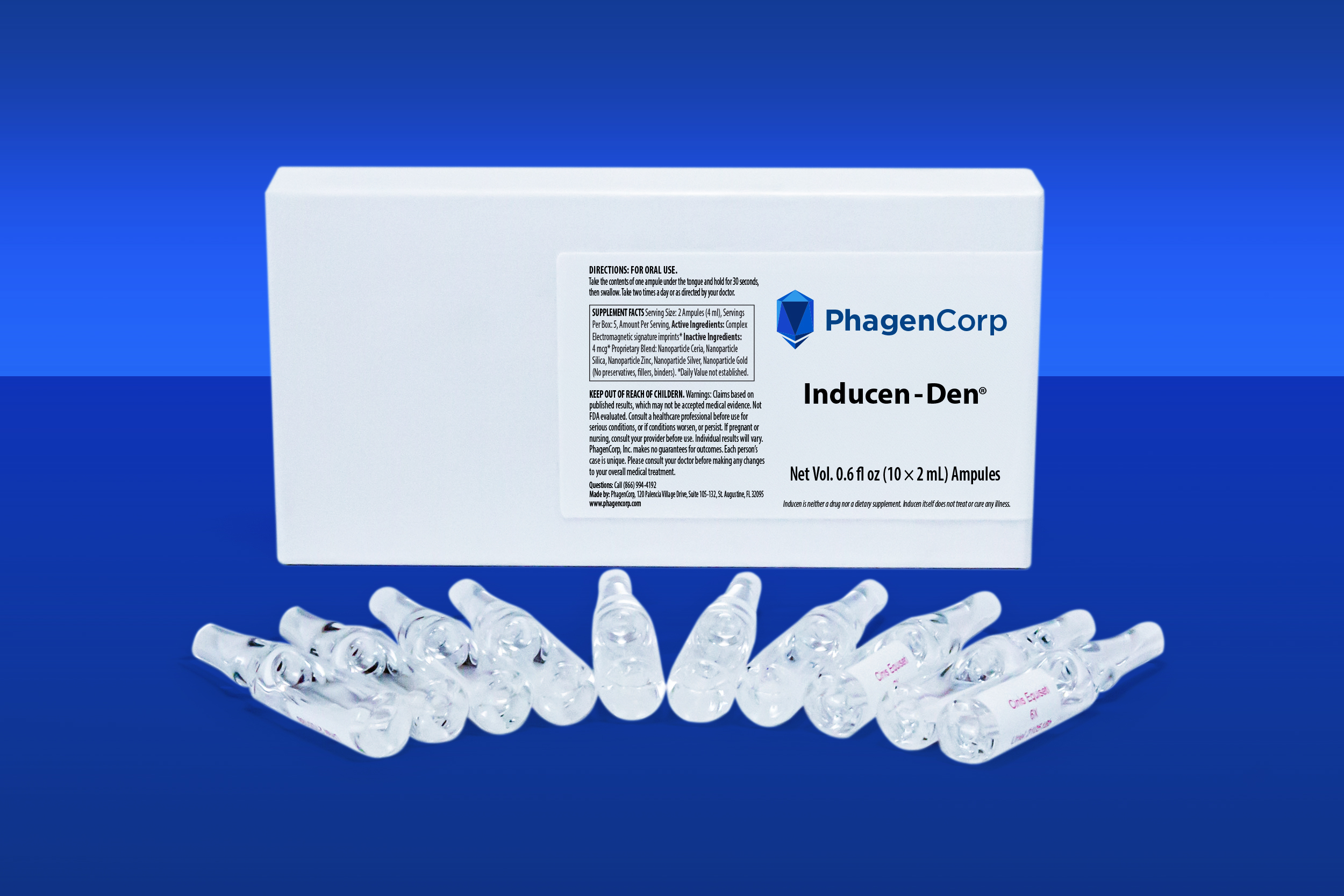
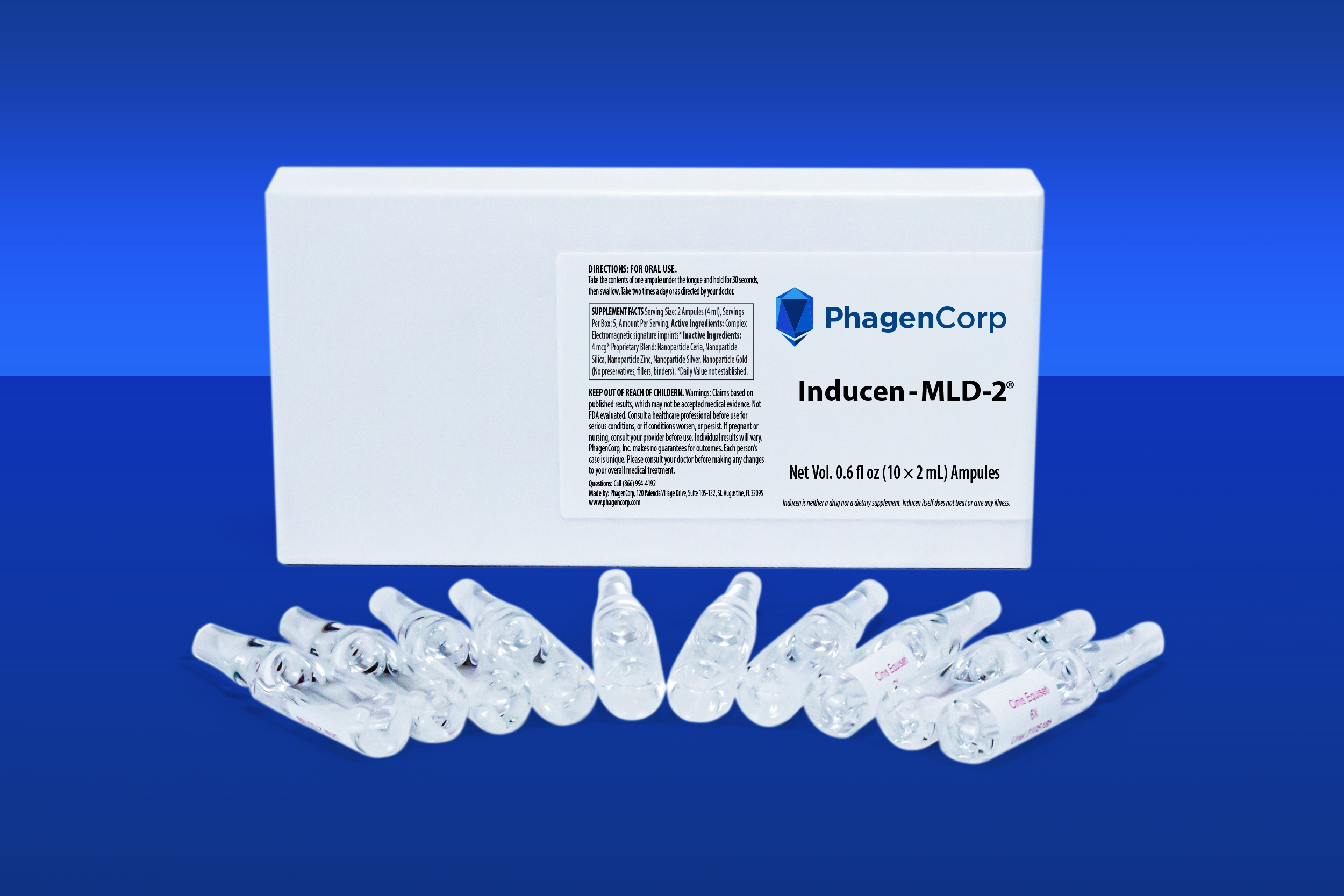
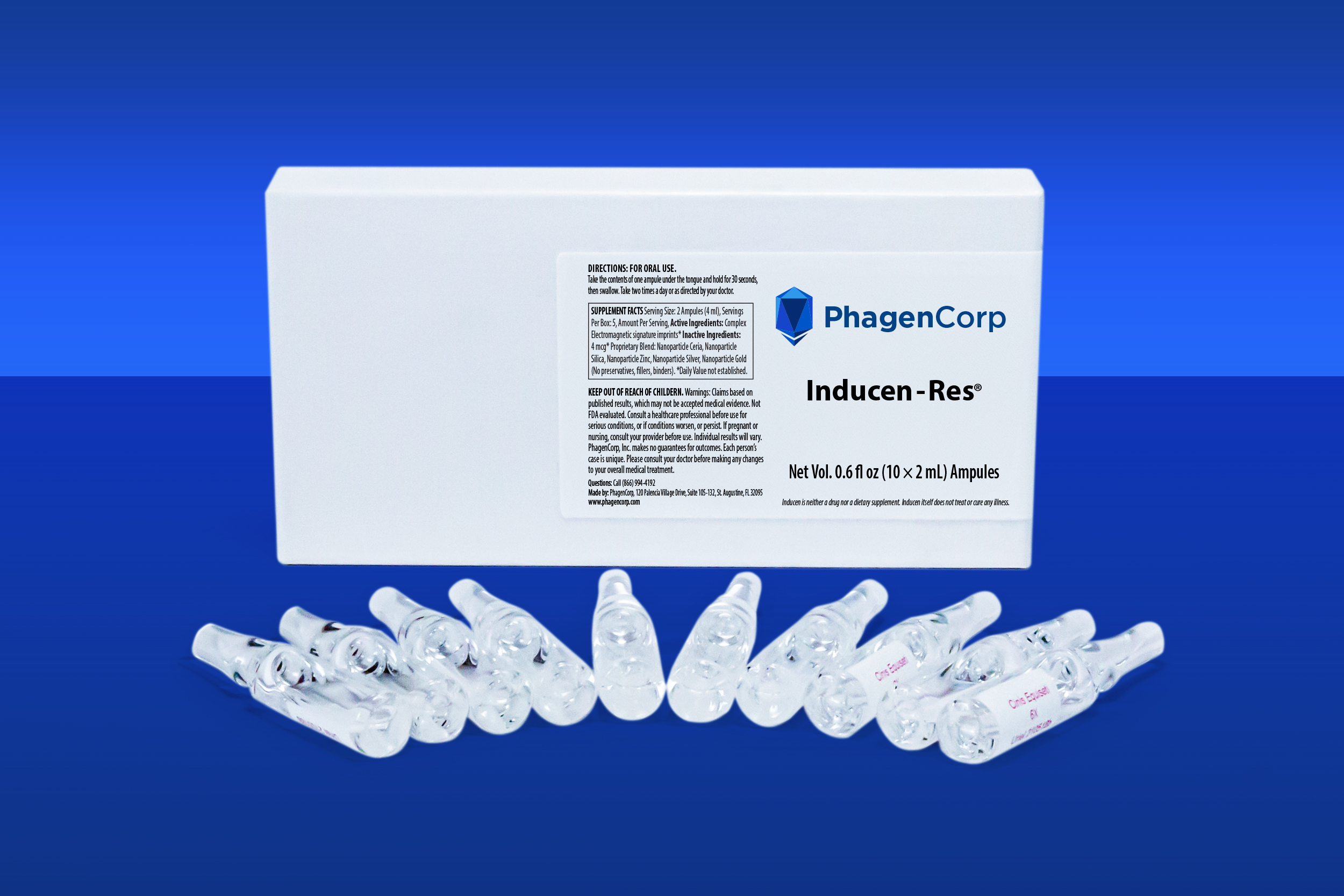
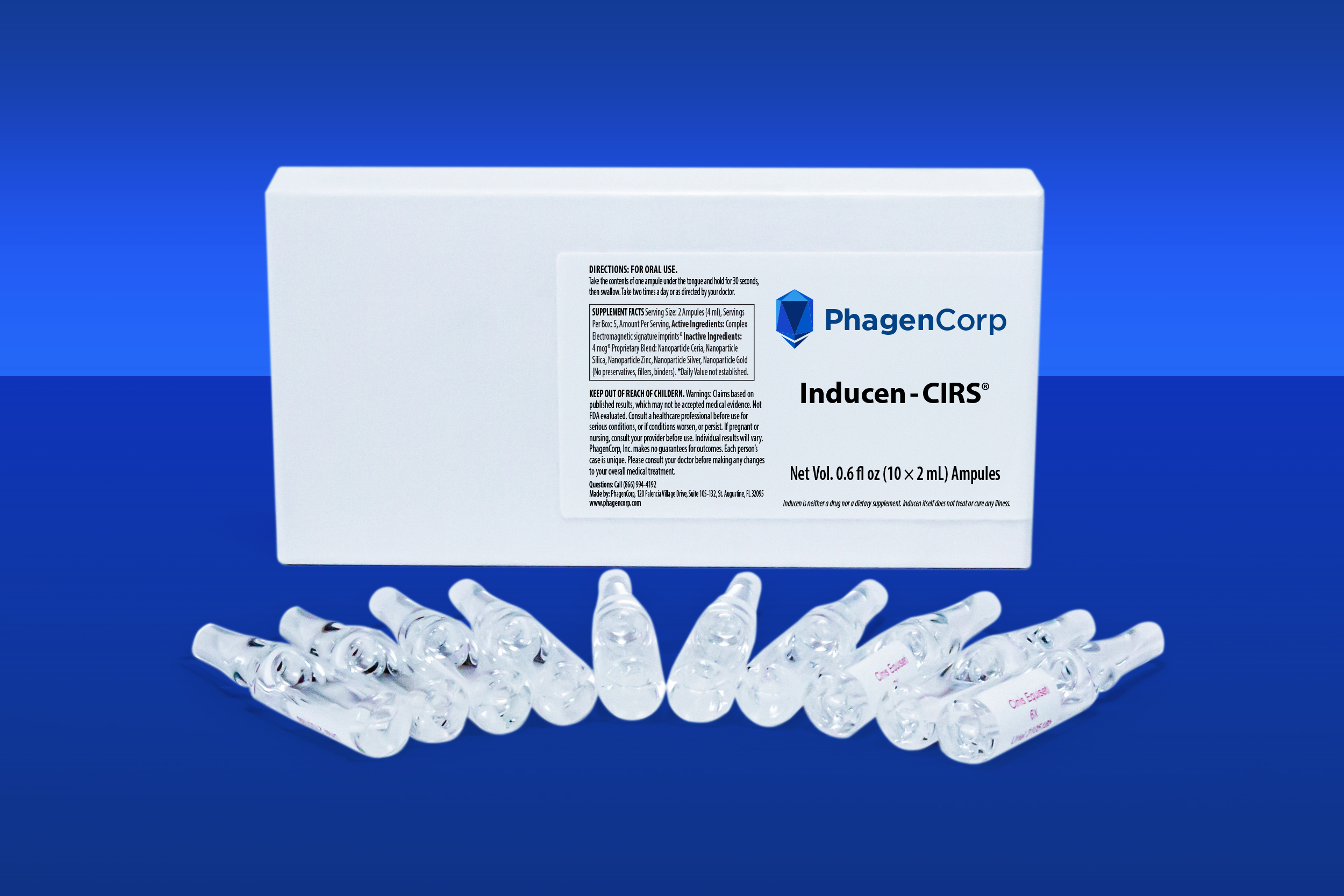
Induced Native Phage Therapy (INPT), harnesses known mechanisms of endogenous (native) bacteriophages—beneficial and benevolent viruses (phages) that naturally infect bacteria and often enter the human body already residing within bacteria, or otherwise already reside within the phageome of the body. This is accomplished by using technology called, Biospectral Emission Sequencing (BES) to isolate specific electromagnetic signatures. These signatures are imprinted into an oral liquid formula, called Inducen® formulas, which, when ingested, induces epigenetic changes in the quiescent (lysogenic) phages, prompting them to enter a lytic cycle where they actively replicate within and destroy targeted bacteria, including those in biofilms, without harming beneficial microbiota or causing adverse reactions, as demonstrated in clinical studies achieving up to 100% apparent pathogen clearance. Inducen formulations are believed to be essentially undetectable by the human body and therefore are naturally non-allergenic and are also completely non-toxic due to having no chemical component within the formula. The Inducen formulas contain no phages, working instead by activating specific populations of native phages to kill the targeted infectious agents.
Microbe-specific Phages Targeted by Inducen-LD/RF®:
**Babesia bigemina, Babesia bovis, Babesia canis, Babesia cati, Babesia divergens, Babesia duncani, Babesia felis, Babesia gibsoni, Babesia herpailuri, Babesia jakimoni, Babesia major, Babesia microti, Babesia ovate, Babesia pantherae, Bartonella alsaticca, Bartonella arupensis, Bartonella baciliformis, Bartonella berkhoffii, Bartonella birtlesii, Bartonella bovis, Bartonella capreoli, Bartonella clarridgeiae, Bartonella doshiae, Bartonella elizabethae, Bartonella grahamii, Bartonella henselae, Bartonella koehlerae, Bartonella melophagi, Bartonella muris, Bartonella peromyscus, Bartonella quintana, Bartonella rochalimae, Bartonella schoenbuchii, Bartonella talpae, Bartonella taylorii, Bartonella tribocorum, Bartonella washoensis, Bartonella vinsonii, Borrelia afzelii, Borrelia berbera, Borrelia bisseti, Borrelia burgdorferi, Borrelia carteri, Borrelia caucasica, Borrelia crocidurae, Borrelia cysts, Borrelia duttonii, Borrelia garinii, Borrelia hermsii, Borrelia hispanica, Borrelia kochis, Borrelia miyamotoi, Borrelia morganii, Borrelia novyi, Borrelia parkeri, Borrelia persica, Borrelia recurrentis, Borrelia tillae, Borrelia turicatae, Borrelia valaisiana, Borrelia venezuelensis, Borrelia vincentii,, Leptospirosis, All Ehrlichia chaffeensis, Ehrlichia (HGE), Francisella tullarensis, Mycoplasma pneumoniae, Mycoplasma hominis, Mycoplasma penetrans, Mycoplasma genitialium, Mycoplasma fermentans incognitus, Mycoplasma salivarium, Trypanosoma gambiense, Schistosoma mansoni, Ricketsia felis, Rickettsia helvetica, Rickettsia parkeri, Rickettsii Typhi, Rickettsia rickettsii, Moraxella osloensis, Protomyxzoa rheumatica (aka: funneliformis mosseae, Glomus mosseae, Glomus intraradices, Plasmodium falciparum, Plasmodium malariae, Plasmodium vivax, Lipopolysaccharides, mixed endotoxins/exotoxins, endotoxin-A.
Chronic Lyme / Relapsing Fever / ME-CFS–Like Illness
Microbial Prioritization & Triage Chart
CLINICAL CLUE BANNER (READ FIRST)
Up-triage immediately if present:
- Relapsing fevers, night sweats, air hunger, hemolysis signs → Babesia dominant pattern
- Neuropathic pain, dysautonomia (POTS-like), neuropsychiatric volatility, vascular skin findings, culture-negative endocarditis → Bartonella dominant pattern
- Migratory arthritis, cranial neuropathies, meningitic or radicular pain, cognitive slowing → Borrelia (Lyme / neuroborreliosis)
- High fever + leukopenia/thrombocytopenia + transaminitis → Ehrlichia / Anaplasma
- Severe headache ± rash, endothelial/vasculitic picture → Rickettsia
- Jaundice, conjunctival suffusion, AKI after freshwater or animal urine exposure → Leptospira
TIER 1 — PRIMARY DRIVERS OF CHRONIC TICK-BORNE ILLNESS
Highest yield for Lyme, relapsing fever, neuroborreliosis, ME-like syndromes
Borrelia (Lyme & Relapsing Fever Core)
- Lyme group:
Borrelia burgdorferi, B. garinii, B. afzelii, B. valaisiana, B. bissetti - Relapsing fever group: B. hermsii, B. turicatae, B. parkeri, B. duttonii, B. recurrentis, B. persica, B. hispanica, B. crocidurae, B. miyamotoi
Why it matters:
Primary neuro-immune driver; immune evasion, tissue persistence, strong cytokine signaling. Note: Borrelia does not contain LPS — inflammation is lipoprotein-driven.
Babesia (Human-Relevant)
- High priority:
Babesia microti, Babesia duncani, Babesia divergens (venatorum) - Occasionally reported in humans:
B. bigemina, B. bovis (low prevalence)
Why it matters:
RBC parasitism → hypoxia, autonomic instability, severe fatigue; frequently blocks Lyme recovery.
Bartonella (Human-Pathogenic Core)
- Primary:
Bartonella henselae, Bartonella quintana - Important in chronic/vascular/neuro cases:
B. vinsonii, B. koehlerae, B. berkhoffii, B. elizabethae, B. rochalimae, B. washoensis
Why it matters:
Endothelial + erythrocyte tropism → neurovascular, neuropsychiatric, and dysautonomic syndromes.
Ehrlichia / Anaplasma
- Ehrlichia chaffeensis
- Ehrlichia (HGE / Anaplasma phagocytophilum)
Why it matters:
Often acute but missed infections amplify chronic inflammatory burden; can destabilize entire system.
TIER 2 — CONTRIBUTORY OR EXPOSURE-DEPENDENT
Can worsen or mimic chronic Lyme syndromes but are not core drivers
Rickettsia
- R. rickettsii, R. parkeri, R. typhi, R. felis, R. helvetica
Pattern: Acute endothelial disease; chronicity uncommon but post-infectious inflammation possible.
Leptospira
- Leptospirosis
Pattern: Hepato-renal injury; prolonged recovery possible, but not classic Lyme coinfection.
Mycoplasma
- M. pneumoniae, M. fermentans incognitus, M. hominis, M. genitalium, M. penetrans, M. salivarium
Pattern: Immune-modulatory; relevant when respiratory, GU, or immune suppression history fits.
Moraxella osloensis
- Rare opportunist; consider mainly with immune compromise.
TIER 3 — LOW YIELD / VETERINARY / CONTROVERSIAL
Do NOT lead with these unless exposure or data is compelling
Primarily Veterinary Babesia
- B. canis, B. gibsoni (canine)
- B. cati, B. felis, B. herpailuri, B. pantherae (feline)
- B. major, B. ovate (bovine)
Primarily Wildlife-Associated Bartonella
- B. grahamii, B. doshiae, B. tribocorum, B. taylorii, B. talpae, B. muris, B. peromyscus, B. capreoli, B. schoenbuchii, B. melophagi, B. bovis, B. birtlesii
Geographically Specific / Non-Tick Syndromes
- Trypanosoma gambiense
- Schistosoma mansoni
- Plasmodium falciparum, malariae, vivax
Taxonomic / Conceptual Entries
- Borrelia cysts (morphologic state, not a separate pathogen)
- Protomyxzoa rheumatica
(incl. Funneliformis/Glomus species — controversial, low reproducibility)
HIGH-YIELD TESTING & TRIAGE
Borrelia
- Two-tier serology (context-dependent)
- PCR (acute / RF)
- CSF studies if neuroborreliosis suspected
Babesia
- PCR (repeat if negative with symptoms)
- Blood smear (acute/high burden)
- Serology (timing critical)
Bartonella
- Serology + PCR / NGS (culture unreliable)
- Echocardiography if endocarditis suspected
Ehrlichia / Anaplasma
- PCR early
- CBC/CMP pattern (cytopenias, transaminitis)
Rickettsia / Leptospira
- Serology ± PCR based on exposure window
Endotoxin/LPS Signals
- Suggest non-Borrelia sources (GI Gram-negatives, dysbiosis, environmental exposure)
PRACTICAL TRIAGE ORDER (WHEN EVERYTHING IS “POSITIVE”)
- Borrelia (Lyme + relapsing fever incl. B. miyamotoi)
- Babesia (microti → duncani → divergens)
- Bartonella (henselae / quintana → vinsonii / koehlerae / berkhoffii)
- Ehrlichia / Anaplasma
- Rickettsia / Leptospira / Mycoplasma
- Veterinary / controversial organisms last
*This presentation was largely generated by ChatGPT for educational purposes only, with no endorsement of PhagenCorp or the Inducen formulas implied or suggested. For licensed healthcare professional use and patient education.
**It is understood that the mainstream science community largely does not support the clinical and laboratory findings of Induced Native Phage Induction against standard and/or non-standard microbes. Such is the nature of new discoveries.