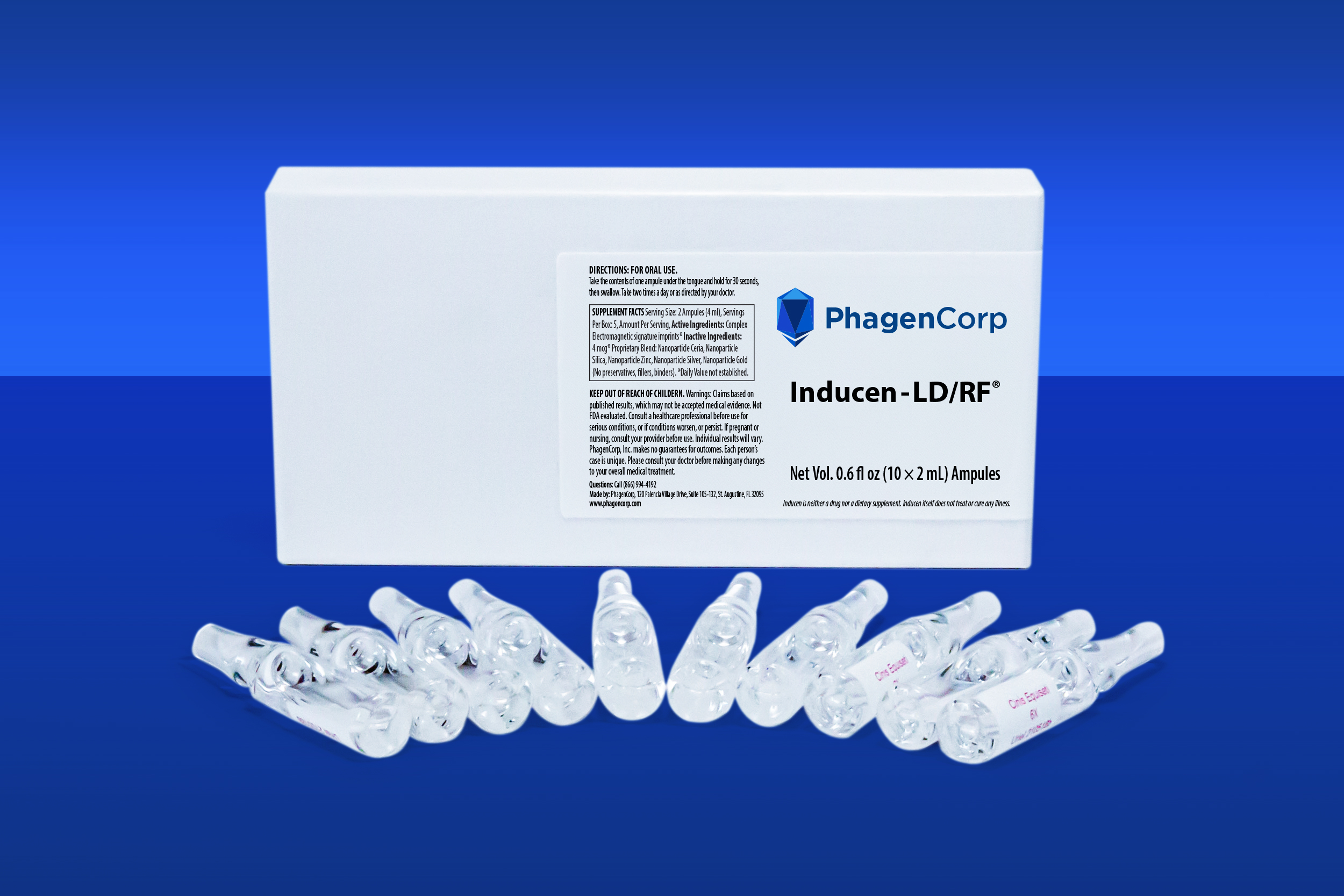
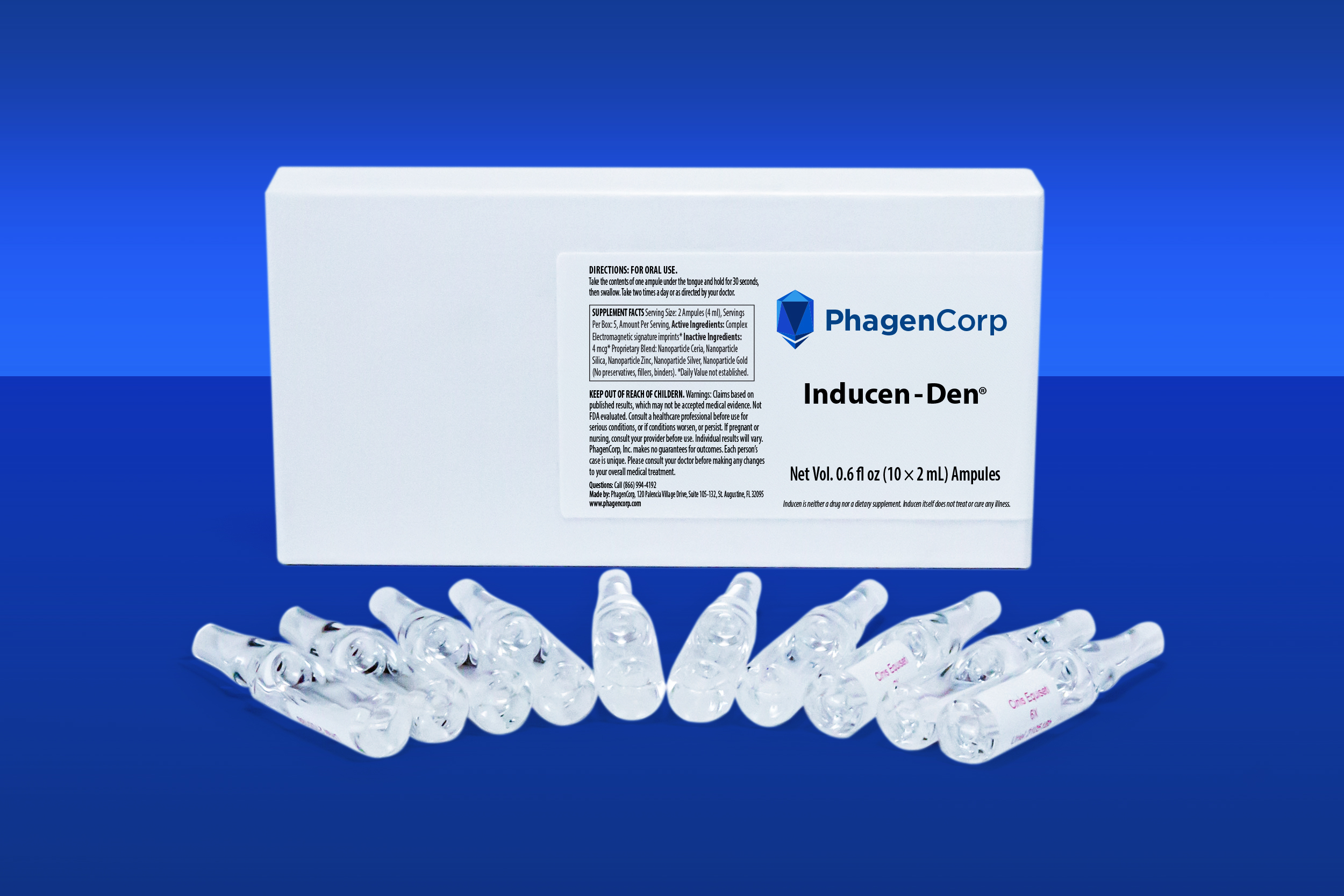
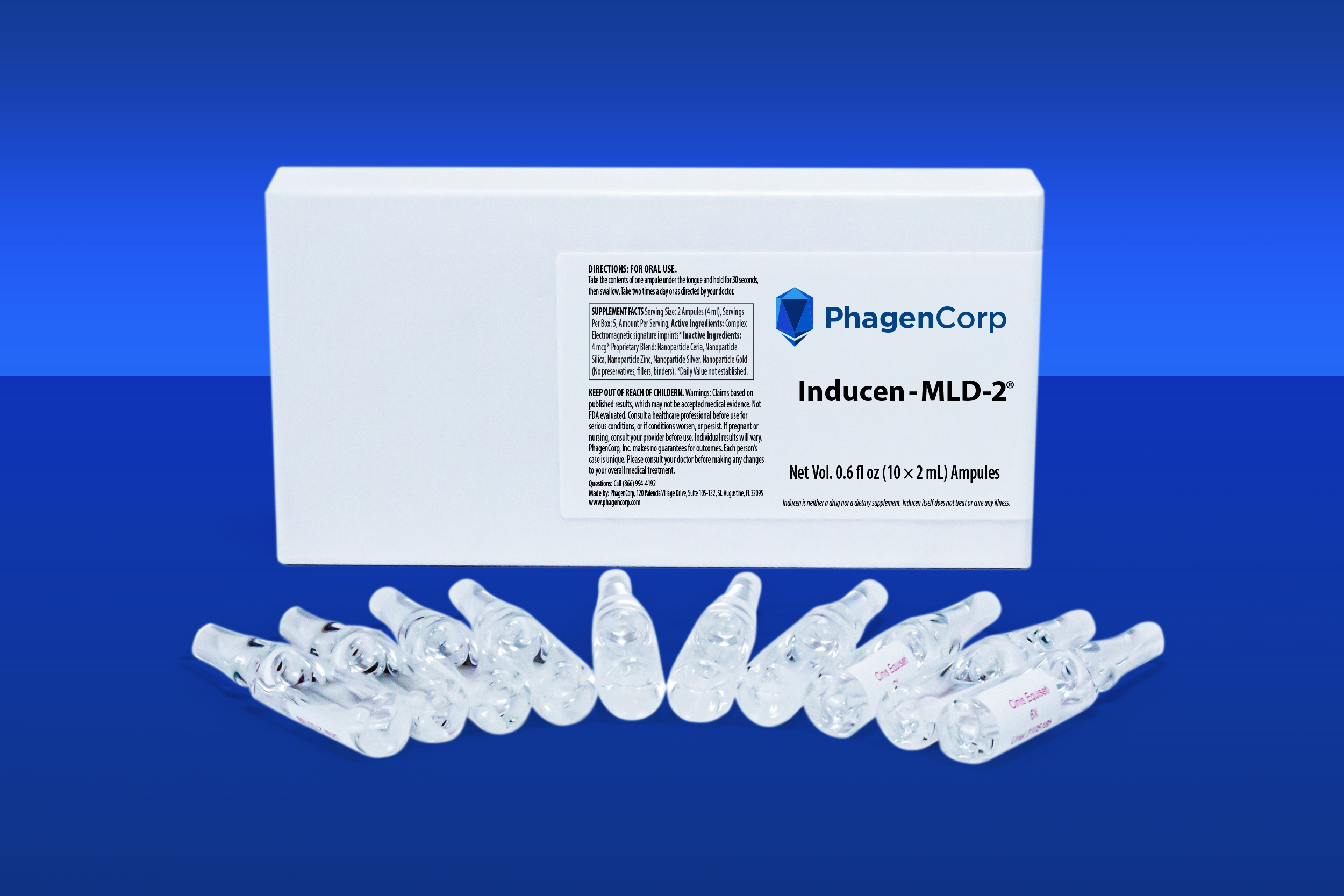
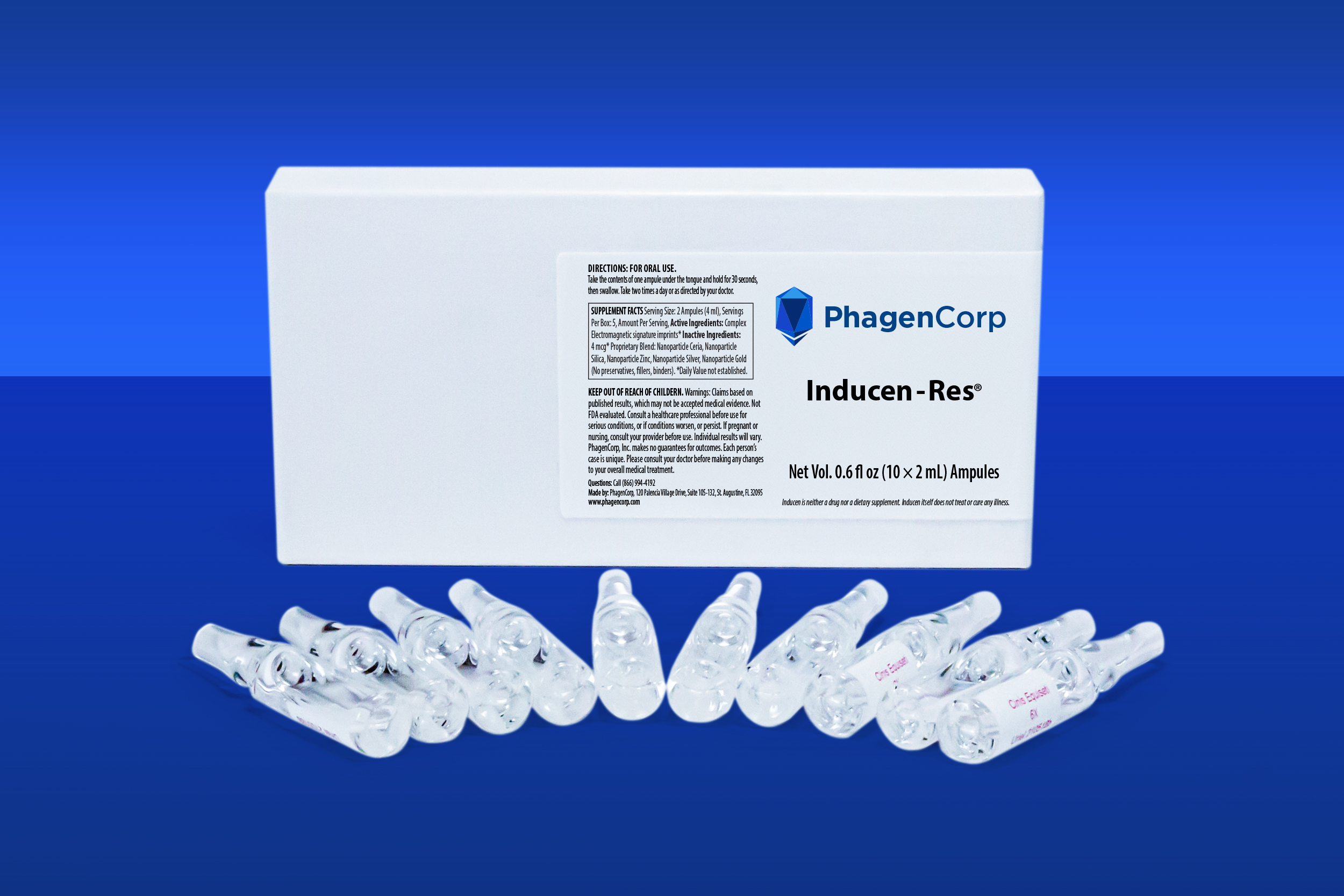
Induced Native Phage Therapy (INPT), harnesses known mechanisms of endogenous (native) bacteriophages—beneficial and benevolent viruses (phages) that naturally infect bacteria and often enter the human body already residing within bacteria, or otherwise already reside within the phageome of the body. This is accomplished by using technology called, Biospectral Emission Sequencing (BES) to isolate specific electromagnetic signatures. These signatures are imprinted into an oral liquid formula, called Inducen® formulas, which, when ingested, induces epigenetic changes in the quiescent (lysogenic) phages, prompting them to enter a lytic cycle where they actively replicate within and destroy targeted bacteria, including those in biofilms, without harming beneficial microbiota or causing adverse reactions, as demonstrated in clinical studies achieving up to 100% apparent pathogen clearance. Inducen formulations are believed to be essentially undetectable by the human body and therefore are naturally non-allergenic and are also completely non-toxic due to having no chemical component within the formula. The Inducen formulas contain no phages, working instead by activating specific populations of native phages to kill the targeted infectious agents.
Microbe-specific Phages Targeted by Inducen-CIRS:
**Acinetobacter Baumannii complex (drug-resistant), Actinomyces israelii, Actinomyces viscosus, Actinomyces odontolyticus, All-LPS toxins, Endotoxin-A (Lipid-A), enterotoxins, exotoxins, Babesia jakimoni, Bacteroides fragilis, Candida albicans, Candida glabrata, Citrobacter, Corynebacter tuberculostericum, Glyphosate, E. Coli and LPS, Enterobacter hormaechei, Enterobacter (Cronobacter) sakazakii, Enterococcus faecalis, Enterococcus faecalis, Escherichia hermanii, Klebsiella aerogenes, Klebsiella mutans, Klebsiella pneumoniae, Methyl-ethyl-benzene, Mycobacterium tuberculosis, Mycoplasma genitialium, Mycoplasma Avium Complex and CARDS toxins, Morganella morganii, Porphyromonas gingivalis, Cutibacterium (Proprionibacterium) acnes, Protomyxzoa rheumatica (Funneliformis mosseae), Pseudomonas aeruginosa, Proteus mirabilis, Salmonella choleraesuis, Salmonella Enteritica and LPS, Staphylococcus saprophyticus Schistosomiasis haematobium, Schistosoma mansoni, Serratia marcescens, pseudomonads, Staph epidermis, Staph aureus, Staph Albus, Staph mutans, Staph saprophyticus (all associated exotoxins, endotoxins), Strep Group B, Strep pneumoniae, Strep pyogenes, Ureaplasma urealytica, Ureaplasma parvum. Also includes everything in Inducen-MLD®: Aspergillus carneus, Aspergillus clavitus, Aspergillus flavus, Aspergillus glaucus, Aspergillus niger, Aspergillus ochraceus, Aspergillus nidulans, Aureobasilium pullulans, Aspergillus ustus, Aspergillus versicolor, Blastomyces dermatitis, Candida auris, Cephalospor, Chaetomium globosum, Cladosporium mix, Cryptococcus neoformans, Cylindrocarpon, Epicoccum mix, Fusarium mix, Geotrichum candidum, Glomus mosseae, FL1953), Glomus intraradices, Helminthosporum, Histoplasmosis, Memnoniella, Microsporum, Monilla albicans, Monotospora, Mixed Mucor, Mucor racemosus, Myothecium, , Mixed Penicillium, Penicillium aurantiogriseum, Penicillium chrysogenum, Penicillium nordicum, Penicillium verrucosum, Phoma mix, Pithomyces, Pullularia, Protomyxzoa rheumatica (aka: funneliformis mosseae, Rhizophus rubra, Rhizophus stolonifer, Rhodotorulla, Scopulariopsis, Smuts (barley, wheat, oats, grass), Spondylocladium, Sporothrix, Sportrichum pruinosum, Sporobolomyces, Stachybotrys, Stemphylium, Trichoderma mix, Wallemia mix, All associated Mycotoxins: 3-Acetyldeoxynivalenol (Fusarium), Acetyl T-2 toxin (Fusarium), Aflatoxin B1 (Aspergillus), Aflatoxin B2 (Aspergillus), Aflatoxin G1 (Aspergillus), Aflatoxin G2 (Aspergillus), Aflatoxin M1 (Aspergillus), Citreoviridin (Penicillium), Citrinin (Penicillium), Cyclopiazonic acid (Penicillium/Aspergillus), Cytochalasin B (Helminthosporium), Deoxynivalenol (Fusarium), Diacetoxyscirpenol (Fusarium), Fumonisin (Fusarium), Gliotoxin (Gliocladium/Aspergillus), Griseofulvin, Moniliformin (Fusarium), 3-Nitropropionic acid (multiple species), Ochratoxin A (Aspergillus/Penicillium species), Patulin (Aspergillus/Penicillium/Byssochlamys), Penetrem A (Penicillium crustosum), Radicinin (Alternaria), Roridin A (Stachybotrys), Rubratoxin (Penicillium rubrum/purpurrescens), Sterigmatocystin (Aspergillus nidulans/A. versicolor), Trichothecenes (Fusarium/Stachybotrys), T-2 toxin (Fusarium), HT-2 toxin (Fusarium species), T-2 tetraol (Fusarium), T-2 triol (Fusarium), Verrucarin A (Fusarium/Stachybotrys), Verrucarol (Fusarium), Zearalenone (Fusarium).
An Overview of CIRS and the Microbial Contributors
(Summary details. Seeking deeper understanding is advised)
Why These Microbes Cause CIRS Specifically
Not everyone exposed gets CIRS. The defining features are:
- Inability to form neutralizing antibodies to biotoxins (see item 5 below)
- Failure to clear toxins via bile
- Persistent innate immune activation
- Suppressed MSH
- Elevated TGF-β1, C4a, MMP-9
- Hypothalamic dysfunction
CIRS is not infection-defined—it is response-defined.
High-Yield Summary Table
| Microbial Group | Role in CIRS | Primary Mechanism |
|---|---|---|
| Toxigenic molds | Primary trigger | Mycotoxins, MSH suppression |
| Actinomycetes | Primary trigger | TLR2 activation, endotoxin |
| Gram-negative bacteria | Amplifier | Lipopolysaccharides (LPS) |
| MARCoNS | Perpetuator | Biofilm exotoxins |
| Borrelia | Secondary driver | Immune dysregulation |
| Bartonella | Secondary driver | Endothelial inflammation |
| Mycoplasma | Chronic amplifier | Intracellular persistence |
| Cyanobacteria | Trigger/amplifier | Hepato-neurotoxins |
CIRS (Chronic Inflammatory Response Syndrome) is primarily a disorder of immune dysregulation in response to chronic exposure to microbial antigens and bioaerosols; mycotoxins may contribute, but HLA risk relates to immune recognition, not toxin clearance.
Below is a mechanism-focused breakdown of the primary microbes most consistently implicated and how each drives the CIRS physiology.
1. Water-Damaged Building (CIRS-WDB) Microbial Complex Overview
(Core CIRS trigger)
A. Toxigenic molds
Examples: Stachybotrys, Aspergillus, Penicillium, Chaetomium…
Mechanism in CIRS
- Produce mycotoxins (i.e., trichothecenes, ochratoxin, aflatoxins…)
- Mycotoxins: fat-soluble, and non-fat-soluble, not antibody-cleared
- Suppress MSH, disrupt VIP, impair T-reg function
- Activate TLR2/TLR4 → NF-κB → cytokine storm
- Cause leaky gut, leaky blood–brain barrier
Clinical fingerprints
- Cognitive dysfunction (“brain fog”)
- Autonomic instability
- Sleep fragmentation
- Chemical sensitivity
- And more…
Why this matters:
Mold doesn’t need to “infect” you—toxins alone sustain inflammation.
B. Actinomycetes (Actinobacteria) – filamentous bacteria)
Examples: Streptomyces, Nocardia, Mycobacterium-like species
Mechanism
- Release potent exotoxins (LPS-like molecules)
- Strong TLR2 agonists
- Drive C4a, TGF-β1, MMP-9 elevation
- Synergize with mold → much higher inflammatory load
Key insight
Many patients react more strongly to actinomycetes than mold spores.
C. Gram-negative bacteria fragments
Examples: Pseudomonas, Acinetobacter, Enterobacter
Mechanism
- Endotoxin (LPS) persists in dust
- Sustains innate immune activation even after leaving exposure
Promotes mast cell activation → histamine release
2. MARCoNS
(Not a trigger, but a perpetuator of CIRS)
MARCoNS = Multiple Antibiotic-Resistant Coagulase-Negative Staphylococci
Key requirements all must be met:
- Coagulase-negative Staphylococcus
- Most commonly Staphylococcus epidermidis
- Occasionally other CoNS species
- Multiple antibiotic resistance
- Especially resistance to:
- beta-lactams
- macrolides
- fluoroquinolones
- Often includes biofilm-associated resistance
- Especially resistance to:
- Persistent colonization
- Usually nasal / sinus
- Often recalcitrant to standard therapy
Without resistance, it is not MARCoNS.
Mechanism
- Colonize deep nasal biofilms
- Secrete hemolysins & exotoxins
- Suppress MSH → low VIP
- Prevent hypothalamic-pituitary recovery
Clinical role
Maintains symptoms even after exposure removal
3. Tick-borne and Vector-borne Infections
(Common secondary drivers)
A. Borrelia (Lyme disease group)
Mechanism
- Immune evasion → persistent Th1/Th17 activation
- Molecular mimicry
- Triggers autoimmune-like inflammation
- Synergizes with mold biotoxins
CIRS overlap
- Elevated C4a
- Cognitive impairment
- Dysautonomia
- Sleep disruption
B. Bartonella
Mechanism
- Endothelial infection
- Vascular inflammation
- VEGF dysregulation
- Mast cell activation
Clinical clues
- Anxiety, rage episodes
- Burning neuropathic pain
- Striae without weight change
3. Mycoplasma species
Mechanism
- No cell wall → immune persistence
- Intracellular survival
- Cytokine skewing toward chronic inflammation
4. Other Biotoxin Producers
Dinoflagellates (e.g., ciguatera-like toxins)
- Neurotoxins
- Sodium channel dysregulation
- Long toxin half-life
Cyanobacteria
- Microcystins
- Hepatotoxic and neurotoxic
- Often overlooked in freshwater exposure
5. Chronic immune activation from microbial components
The HLA patterns described in CIRS line up much more convincingly with:
Examples:
- Actinomycete cell-wall fragments
- Bacterial lipoproteins
- Fungal cell-wall antigens (β-glucans, mannans)
- Bioaerosols (not toxins per se)
These are:
- Proteinaceous or complex antigens
- Presented via HLA class II
Capable of driving persistent innate + adaptive signaling
*This presentation was generated by ChatGPT for educational purposes only, with no endorsement of PhagenCorp or the Inducen formulas implied or suggested. For licensed healthcare professional use and patient education.
**It is understood that the mainstream science community largely does not support the clinical and laboratory findings of Induced Native Phage Induction against standard and/or non-standard microbes. Such is the nature of new discoveries.